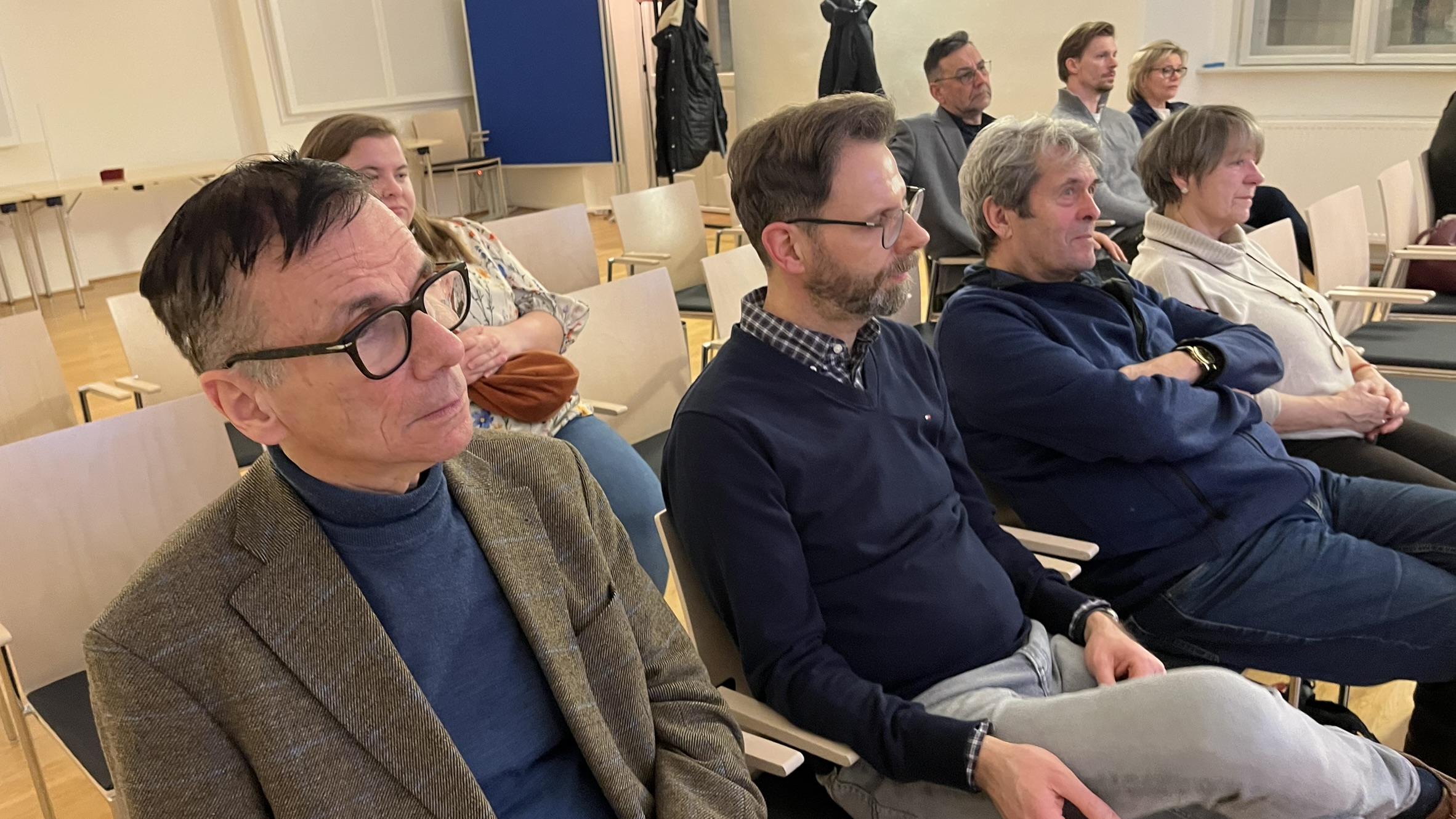
 Understanding, questioning and correctly interpreting media was the central theme of a recent evening event held at the Bildungszentrum St. Bernhard in Wiener Neustadt. The event was organised by Peter Mazohl and focused on the EU co-funded BonJour! project (Erasmus+ 2023-1-IT02-KA220-ADU-000160320, focusing on media literacy), which aims to strengthen media literacy among adults aged 55 and over.
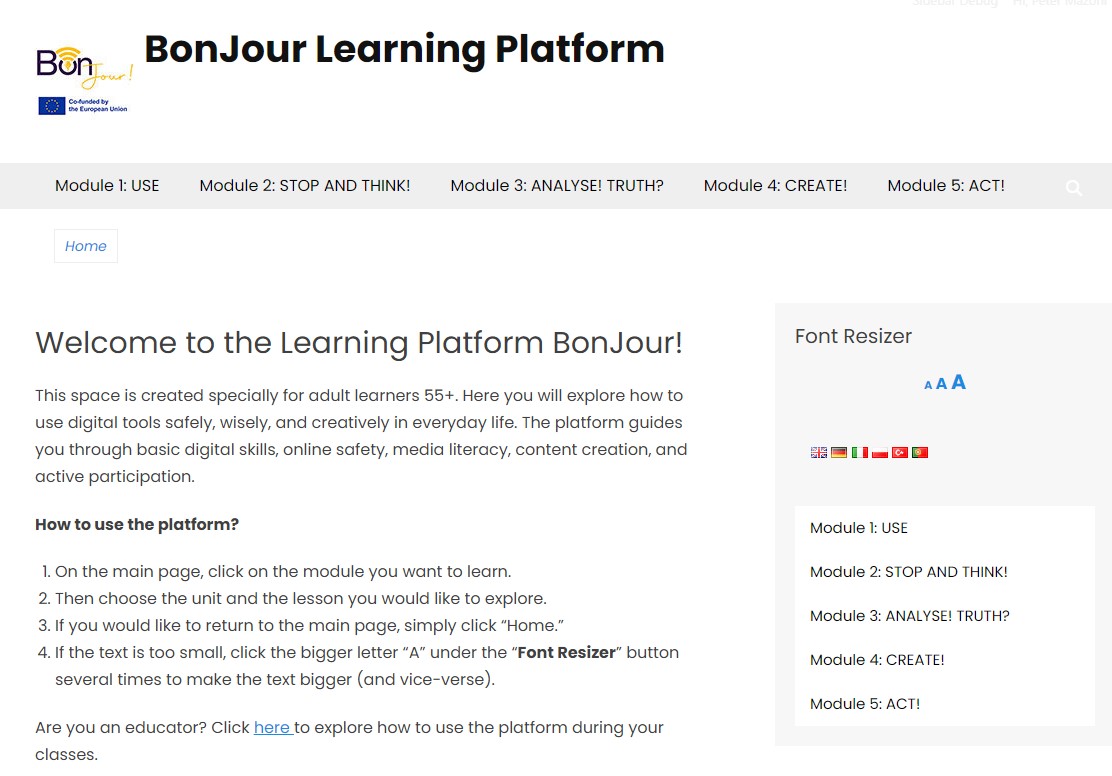
The BonJour! project offers a web-based learning platform designed to help older adults develop important digital and media skills. Participants can learn how to create digital content and gain a more profound understanding of how images, news, and social media shape our perception. A particular focus is placed on recognising reliable information, identifying fake news, and critically evaluating media content.
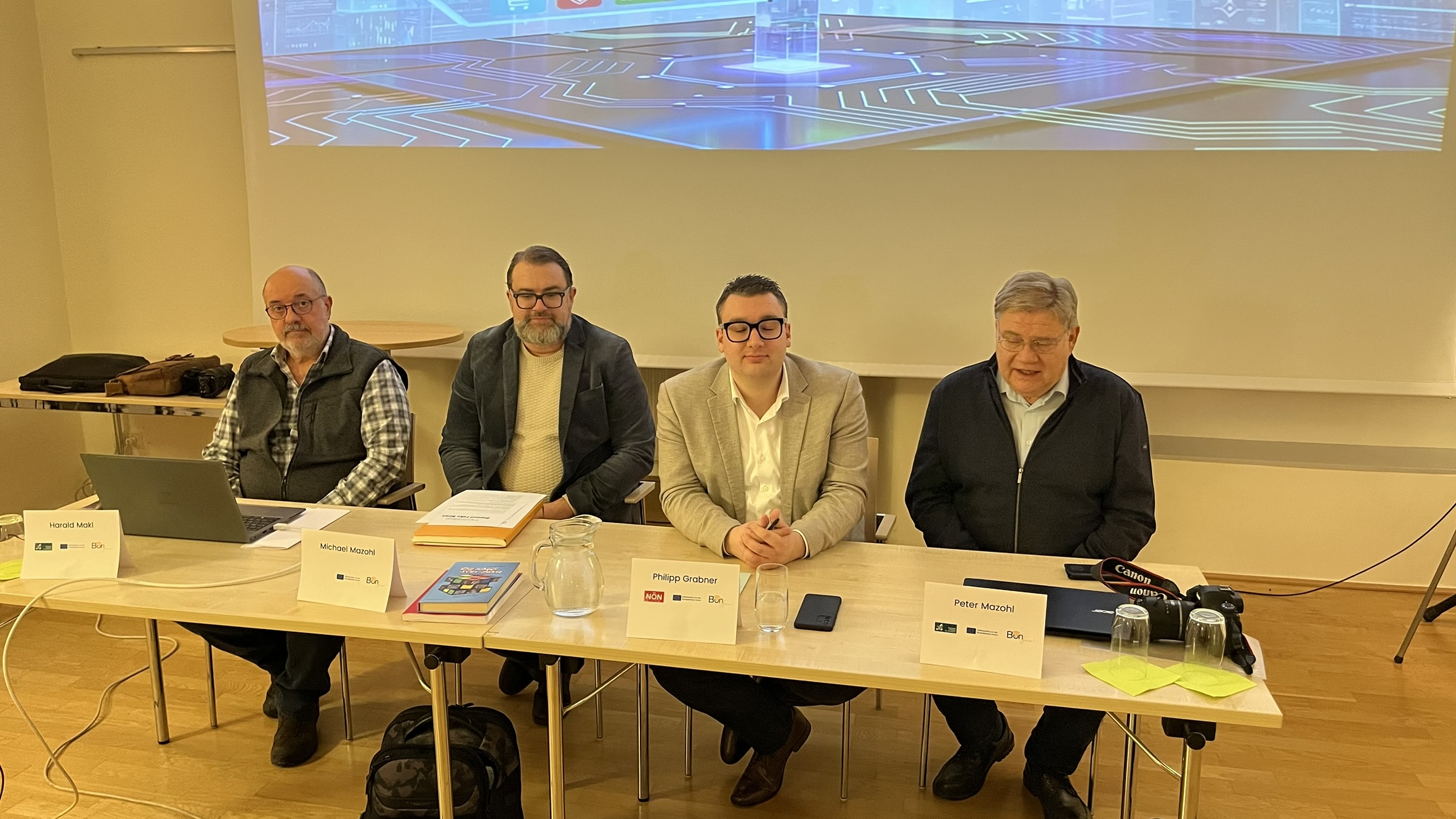
During the event, several speakers provided short impulse presentations from different professional perspectives. Peter Mazohl, the Austrian project coordinator, introduced the BonJour! project and highlighted the importance of media literacy in an increasingly digital society.
Philipp Grabner, formerly a local journalist and now a member of the editorial team of the Niederösterreichische Nachrichten, spoke about the importance of local journalism and the challenges faced by today’s media landscape. His presentation addressed how misinformation and filter bubbles can influence public opinion.
Michael Mazohl, media consultant, podcaster and author, explored the dynamics of social media under the title “Links, Likes and Lies”. His talk focused on how online platforms influence communication, visibility and the spread of information.
Finally, media educator Harald Makl presented the structure of the BonJour! learning platform. The platform consists of five modules and offers personalised learning paths, automated progress analysis and feedback. It is designed to be easy to use and to support learners in developing media competence independently.
Open for questions
The evening concluded with a panel discussion and open Q&A session, giving participants the opportunity to ask questions and share their perspectives. The event ended in a relaxed atmosphere with a small buffet, allowing for further conversations and exchange of ideas.
The strong interest from participants showed that media literacy is an increasingly important topic—especially for older adults who want to navigate the digital world confidently and responsibly.
 Funded by the European Union. Views and opinions expressed are however those of the author(s) only and do not necessarily reflect those of the European Union or the European Education and Culture Executive Agency (EACEA). Neither the European Union nor EACEA can be held responsible for them.