In a time when news no longer lies printed on the breakfast table but appears on our smartphones every second, the nature of information has changed fundamentally. In the past, editorials in well-known newspapers formed the basis of public debate; today they compete with short-lived “likes” and often questionable messages on social networks. This clearly calls for “media literacy for seniors” and for all citizens who want to engage with media in a critical way.
For many citizens, especially for the generation that grew up with the reliability of traditional journalism, an urgent question arises: Who can we still trust in this digital labyrinth?
The narrow line between opinion and manipulation
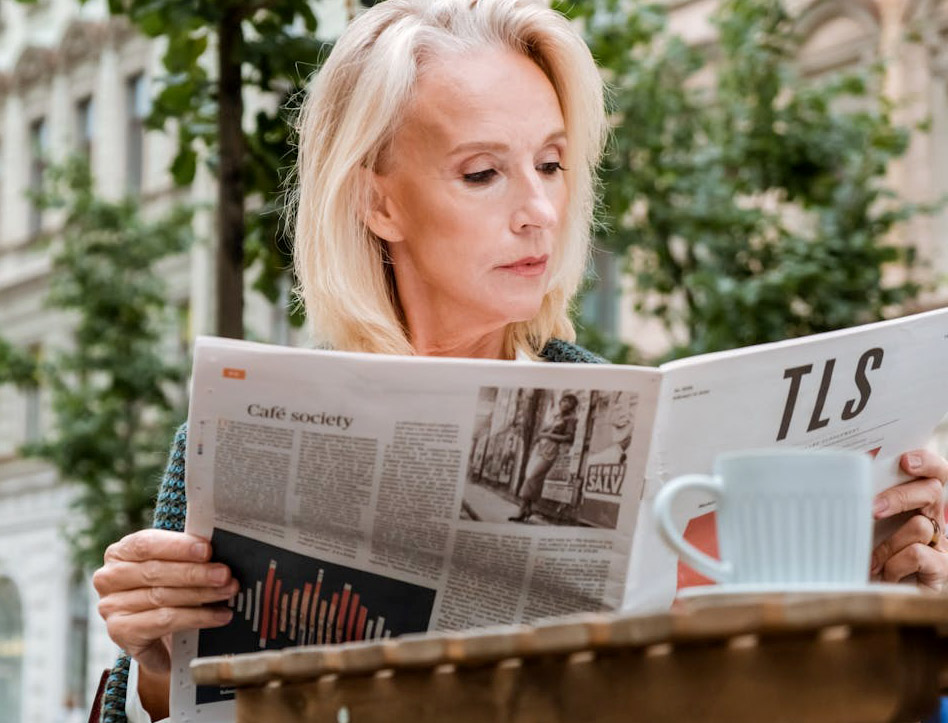
Digital change offers great opportunities for participation, but it also brings risks for social cohesion. Disinformation and targeted false messages can polarise debates and weaken trust in our democratic institutions. The generation 55+ in particular faces a new challenge here: to combine their many years of life experience with the technical mechanisms of the digital world.
Where does the personal opinion of a user end, and where does a systematic lie begin? To recognise this narrow line, more than technical knowledge is needed – it requires a return to the principles of professional journalism.

A look into the workshop of truth
This is exactly where our upcoming event begins. We are pleased to welcome two experts who will help bring clarity to the dense flow of information:
-
A leading journalist will speak about the struggle for objectivity in the digital age and explain why well-researched editorials are still an essential compass today.
-
An experienced media consultant, author and blogger will provide insights into the careful practice of research. Using his current book, which is based on more than 200 verified sources, he will show that truth is not a coincidence, but the result of hard and systematic work.
The BonJour! Project: building bridges and strengthening skills
 Behind these activities stands the BonJour Project. Our goal is to strengthen the media literacy of older adults in a sustainable way. We believe that media education is not a privilege of the young, but a necessary condition for active citizenship at every age.
We developed the new professional role of the “Media Educator for the Elderly” – specialists who support seniors in becoming not only consumers, but confident and critical actors in the digital world. The aim is to strengthen critical thinking, increase self-confidence, and build bridges between generations.
These efforts are supported by an online course that offers an overview in five modules. It introduces basic knowledge about working on the internet, understanding the difference between facts and opinions, and creating reliable journalistic publications. The self-learning course is available on an easy-to-access platform: BonJour! Training Kurs and is offered in German, English, Italian, Portuguese, Polish, and Turkish.
Invitation to dialogue
We warmly invite you to become part of this important debate. Let us learn together how to recognise the mechanisms of manipulation and bring the quality of information back to the centre of public discussion.
Stay informed, stay critical – together let us preserve the culture of well-founded words.
Media literacy for seniors
 Funded by the European Union. Views and opinions expressed are however those of the author(s) only and do not necessarily reflect those of the European Union or the European Education and Culture Executive Agency (EACEA). Neither the European Union nor EACEA can be held responsible for them.