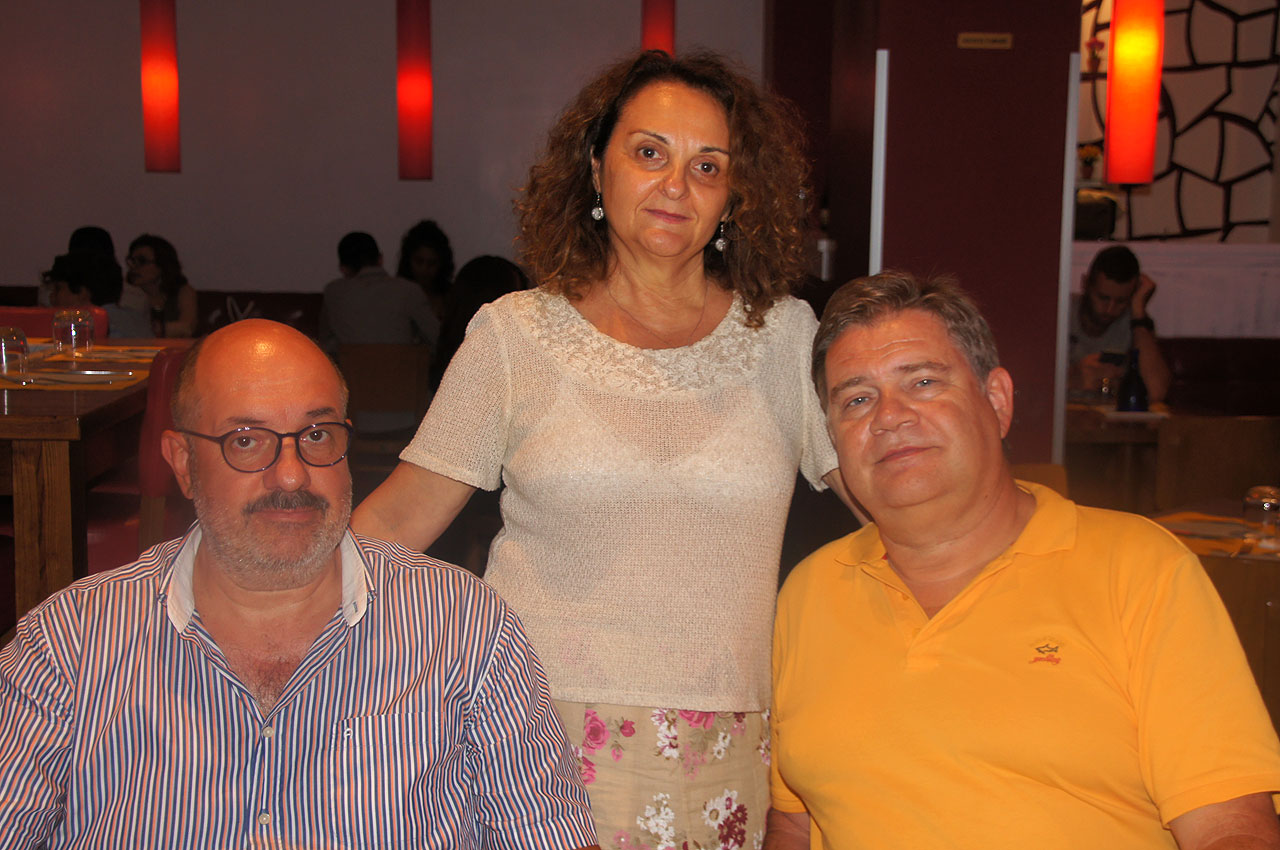
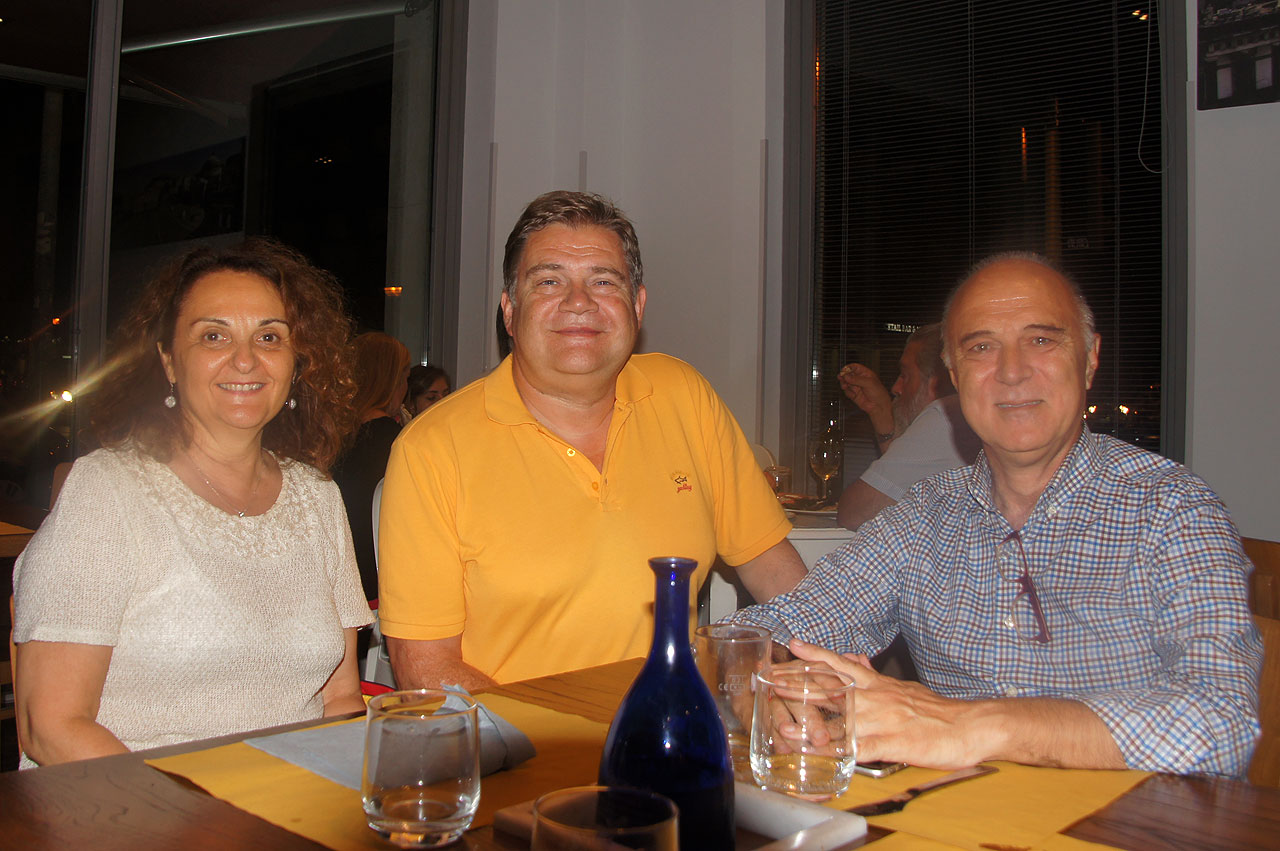
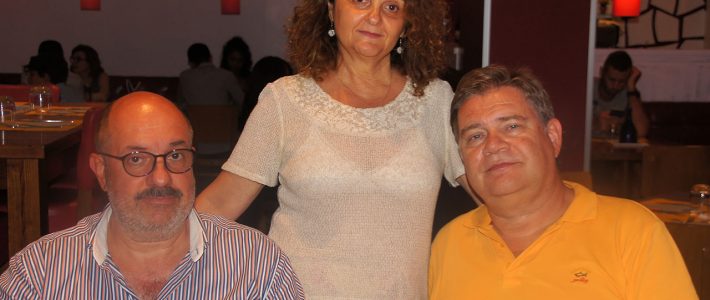
Peter Mazohl and Harald Makl, both from the board of the EBI/EIE, visited Francesca Neiviller (I.T.S. Vittorio Veneto Salvemini) for consultations and the first planning of the VTT-Box Erasmus+ Project begin of September 2017 in Latina.
The aim of the meeting was the planning and structuring of the courses that should be developed during the project. Besides this, many organisational and structural issues were discossed and taken in account for the kickoff meeting of the project, which will take place in Wiener Neustadt in October 2017.
Halard Makl (EBI/EIE), Francesca Neiviller (I.T.S. Vittorio Veneto Salvemini), and Peter Mazohl (EBI/EIE) during the meeting
Francesca Neviller, Peter Mazohl, and Maurizio Paluzzi after the meeting
This project aims to develop special Distance Learning courses, an innovative self-evaluation method and an appropriate transferability guide.
The project aims to create a special virtual toolbox for teachers as a sophisticated tool for developing Open Online Distance Learning (OODL) courses which means open, online, flexible and technology enhanced education (OOFAT). The mixture of of the partners ensures the necessary competences, values, skills and knowledge for developing an innovative approach to OODL. This project uses a strategic cooperation between formal and non-formal/informal educational providers using ICT based teaching and the enhancement of digital integration in learning. It will be enhancing teachers’ professional development and support students‘ acquisition of values, skills and competences.
The 5 consortium members are well distributed in Europe:
University of Crete, GR (specialised in innovative education) will focus on supporting students‘ acquisition of skills and competences,
EBI/EIE, AT is a teacher training institution with experienced in Distance Learning impacts in enhancing teachers’ professional development and in OODL
The I.T.E Vitorio Veneto, IT and
Colegio Internacional Costa Adeje, ES are two high schools (offering a multicultural background) with different orientation in
teaching and experienced in eLearning and modern teaching methods.
The Colegio Costa Adeje is the coordinator in the project.
The Swedish Association for Distance Education (SADE) has a special focus on OODL and OOFAT and provides experience in quality enhancement systems.
The VVT-Box methodology focuses on items which are either not yet common or still missing in Open Online Distance Education as a
Innovative approach to OODL
Appropriate quality enhancement framework
Innovative and completely new motivating self-evaluation method for students (Mandala method)
New developed innovative tool for course creators
Special training course for teachers to implement the new methods in course creation
Transferability and evaluation guide to enable the transfer to other educational fields
The project developes C-VET training courses for training performed in formal and in non-formal C-VET education. These courses use Blended Learning as a technology enhanced method and focus on the use of multiple devices (as used by the trainees an everyday life). The innovation is the implementation of a trainee-focusing pedagogical framework based on heutagogy, the development of an all-encompassing quality enhancement framework (including also the pedagogy) and the approach to the diversity of various technical equipment (the multiple devices). The project is complementary to a Grundvig Multilateral project by transferring the theoretical developed outputs to a practical implementation in a different (but similar) educational sector.
The project combines knowledge and experience from VET training institutions with the research and innovation potential of universities.
The applicant SAFA is an important Spanish school foundation focusing on school and vocational education,
EFQBL is a VET and trainers education organisation and was founded as a dissemination tool out from a Blended Learning Multerlateral Grundtvig Project,
DigiLab from the University La Sapienza and the
University of Aveiro are specialised in innovation in technology enhanced training and the related pedagogy.
SADE is a specialist in Distance Learning and quality enhancement frameworks.
These participants ensure a consortium well-distributed in Europe.
The project results impact to the trainer community in Europe providing innovative and modern training (based on Blended Learning and including workplace-based training) with a technology enhanced approach to training using multiple devices.
EBI/EIE was founding member of the EFQBL and still is close connected to this organisation.
Web page of the project
TIBL Project Logo
The webpage of the project offers considerations about Blended Learning, the use of multiple devices, pedagogical considerations in context with the training and the specific training conditions in web-based C-VET training and the working trainees.
The created project results including the developed toolbox are free for use.
The project aims to create a special virtual toolbox for teachers as a sophisticated tool for developing Open Online Distance Learning (OODL) courses which means open, online, flexible and technology enhanced education (OOFAT). The mixture of of the partners
ensures the necessary competences, values, skills and knowledge for developing an innovative approach to OODL. This project uses a strategic cooperation between formal and non-formal/informaleducational providers using ICT based teaching and the
enhancement of digital integration in learning. It will be enhancing teachers’ professional development and support students‘ acquisition of values, skills and competences.
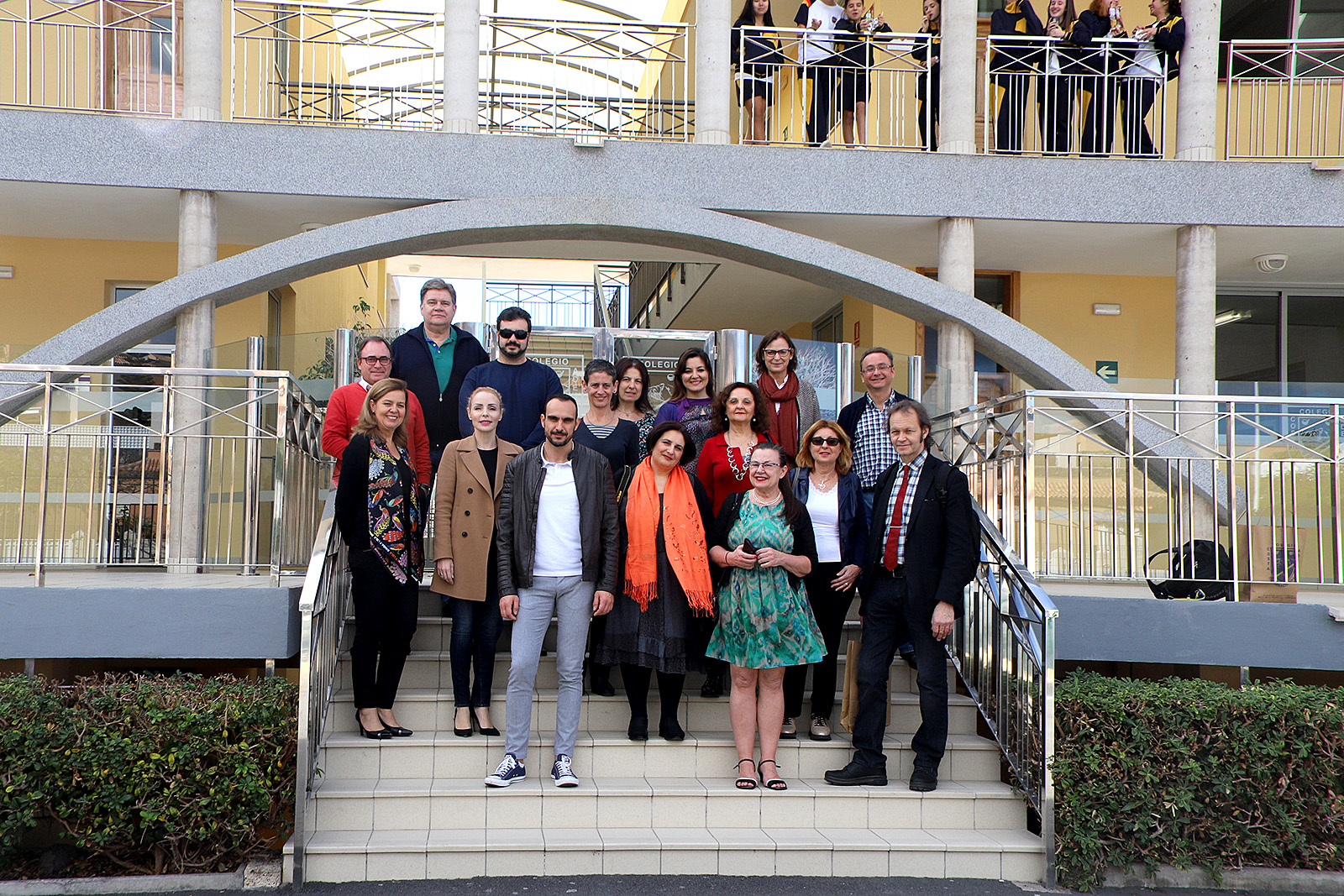
The project team at the teaching event in Teneriffe (in front of the building of the Colegio Internacional Costa Adeje)
The 5 consortium members are well distributed in Europe:
University of Crete, GR (specialised in innovative education) will focus on
supporting students‘ acquisition of skills and competences,
EBI/EIE (AT) is a teacher training institution with experienced in Distance
Learning impacts in enhancing teachers’ professional development and in OODL
The I.T.E VITTORIO VENETO SALVEMINI (IT) and
Colegio Internacional Costa Adeje (ES) are two high schools (offering a multicultural background) with different orientation in teaching and experienced in eLearning and modern teaching methods.
The Swedish Association for Distance Education (SADE) has a special focus on OODL and OOFAT and provides experience in quality enhancement systems.
The VVT-Box methodology focuses on items which are either not yet common or still missing in Open Online Distance Education as a
Innovative approach to OODL
Appropriate quality enhancement framework
Innovative and completely new motivating self-evaluation method for students (Mandala method)
New developed innovative tool for course creators
Special training course for teachers to implement the new methods in course creation
Transferability and evaluation guide to enable the transfer to other educational fields
The project started with October 1, 2017 and will last for two years. The findings and outcomes of the project can be found at the project’s web page VTT-Box.
To follow the project’s activities and to read the related postings please have a look at the project’s blog.
The European Commission support for the production of this publication does not constitute an endorsement of the contents which reflects the views only of the authors, and the Commission cannot be held responsible for any use which may be made of the information contained therein.
The „European Initiative for Education“ (EIE) is an international (European) private Non-Profit education and training organization in Austria (legal status: association). There are offices in Wiener Neustadt / Austria, Adeje/Spain, and in Athens/Greece.
EIE’s mission is to promote an innovative approach to education, training, and culture. A current focus is active participation in the Erasmus+ Programme of the European Union.
The EIE is part of a network of similar institutions across Europe, including training organisations, educational institutions, research and development centres, public authorities, and subject matter experts. The educational focus is on train-the-trainer programmes, as well as Adult Education and School Education.
The course offerings focus on Technology-Enhanced/Enabled Learning (formerly known as e-learning), using platforms such as Moodle, Blended Learning and Flipped Learning 3.0; Multimedia (interactivity and multimedia content), Content Management Systems, Presentation Techniques, Project Management, and the use and integration of AI and GenAI in teaching, training, and content development.
The EBI/EIE is not only a training provider but also actively engaged in research. The research team regularly publishes findings and participates as speakers at international conferences, such as ICERI in Seville.
We are actively involved in the Erasmus+ Programme and offer:
Training in the Frame of KA 1 projects (training for teachers, trainers, and adult learners)
Strategic Partnerships – KA 2 projects
Since the autumn 2013, the EBI/EIE is involved in European Projects or coordinates one. In 2015, the EBI/EIE and other partners from the BladEdu founded the European Foundation for Quality in Blended Learning, EFQBL, as a dissemination tool for Blended Learning. In consequence, the EBI/EIE cooperates regularly with this organization.
VTT-Box (School Education)
This project has been finished in November 2019.
TIBL-Project (EFQUBL)
This project has been finished in November 2019.
Flipped Adult Education (Adult Education)
This project has been started in 2018 and finished finally in August 2021 (Prolonged due to COVID-19)
DigiComPass (Adult Education)
This project aims to develop a course package to increase digital competencies of adults (following the DigComp 2.1 Framework)
BonJour! (Adult Education)
The project aims to enhance media literacy among older individuals through journalism and digital skills training, fostering social activism and bridging generational digital divides by establishing a pool of media educators tailored for the elderly, supported by a methodology, professional profile identification, training curriculum, and an e-learning platform.
CICERO (Adult Education) This project was dealing with digital competencies and digital photography. It was started with the Kickoff Meeting in Wiener Neustadt and finished with a final meeting at the University of Stockholm.
The project was awarded as a “Project of Good Practice” by the Swedish National Agency.
TEST (School Education) This school project focusing on the development of multimedia-based learning tools for science subjects started in the autumn of 2018 and has been finished in 2021.
CONNECT (Higher Education)
The project cares about the development of an innovative multidisciplinary and cross-sectional curriculum for students from the computer and information, health, and social sciences background.
InterMedia (Adult Education)
This project cares about multimedia and interactivity in learning.
We offer high-quality Training Courses for adult learners, educators and professionals, with a strong focus on innovative learning, digital competences and continuing professional development. Our courses combine practical learning with clear learning outcomes and transparent assessment.
In the future, selected training courses will also lead to Micro-Credentials, providing learners with recognised and transparent evidence of the competences they have achieved. All Micro-Credentials will be developed and awarded according to our dedicated Quality Assurance System.
In addition, EBI operates a newly developed low-threshold online training platform. It provides easy access to learning opportunities and is designed to make digital learning simple and accessible, including for learners with limited experience of online learning.
 Peter Mazohl and Harald Makl, both from the board of the EBI/EIE, visited Francesca Neiviller (I.T.S. Vittorio Veneto Salvemini) for consultations and the first planning of the VTT-Box Erasmus+ Project begin of September 2017 in Latina.